Common SEO mistakes can cost coaches valuable opportunities, especially in 2025. Most web pages receive little to no organic search traffic from Google. According to Ahrefs, around 96.55% of all web pages get no organic traffic. These errors can hinder your ability to connect with potential clients and negatively impact your online presence. This post will highlight key SEO mistakes coaches should avoid and provide practical strategies to address them.
Common SEO Mistakes Coaches Must Avoid for Success
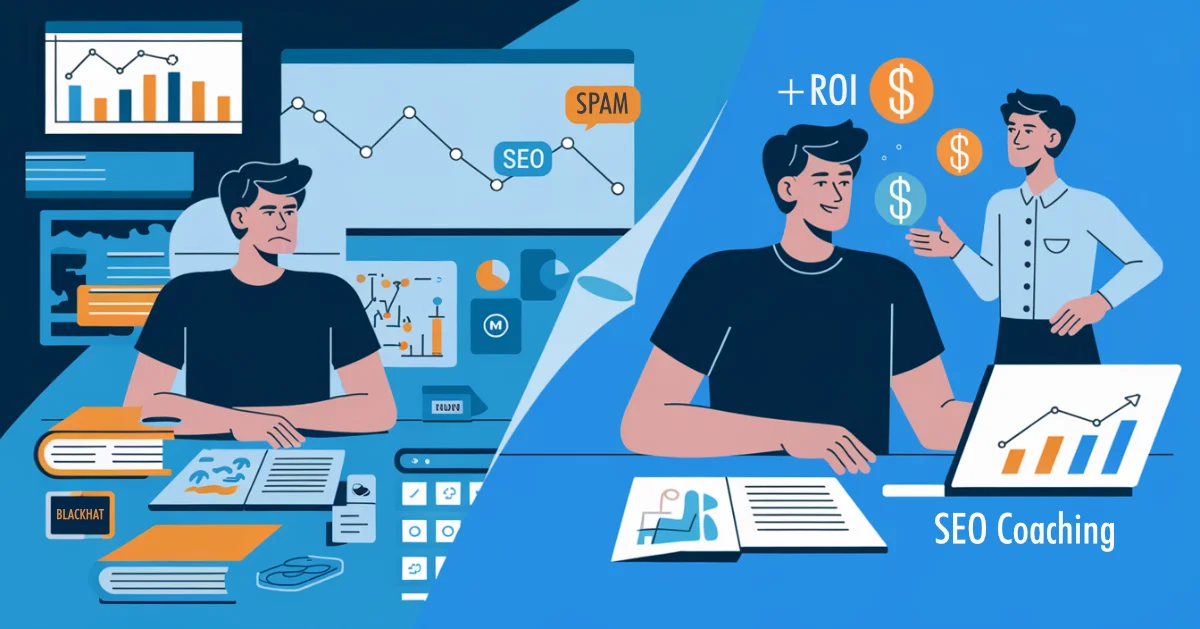
SEO (Search Engine Optimization) is an investment in your business. “When done correctly, it can deliver a significant return on investment (ROI), driving growth and attracting clients.” For example, one coach increased their client base by 50% within six months through targeted SEO improvements, leading to better visibility and higher engagement.
But making mistakes can have the opposite effect, draining your time and resources. For example, using outdated or incorrect SEO tactics can lead to wasted ad spend, low-quality traffic, and missed opportunities to engage with potential clients.
By understanding common SEO mistakes and best practices, you can ensure your website is optimized to attract clients, increase conversions, and boost your brand's credibility.
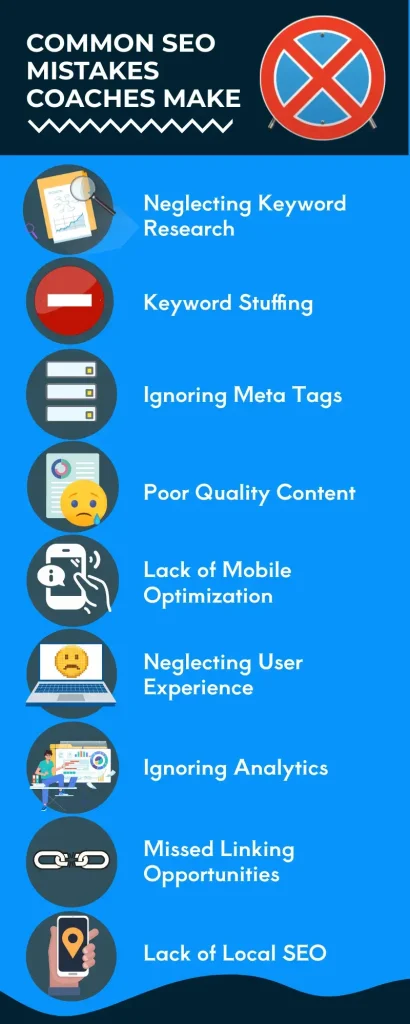
1. Neglecting Keyword Research
Many coaches underestimate the importance of thorough keyword research. “Using generic keywords limits your reach and prevents you from connecting with your target audience effectively.”
Best Practice: Invest time in researching relevant keywords focusing on your niche. Use tools like Google Keyword Planner and SEMrush to identify specific phrases that potential clients are using. These tools are particularly effective for coaches because they help find niche-specific focus keywords that align with the unique needs of your target audience, increasing the chances of attracting qualified leads. Tailor your content around these keywords to improve your visibility in search results.
2. Keyword Stuffing
One of the biggest SEO mistakes that coaches make is keyword stuffing — overloading content with repetitive keywords. Keyword stuffing not only creates an unpleasant reading experience but also risks search engine penalties, as algorithms become more sophisticated in detecting unnatural keyword usage.
Best Practice: Instead of cramming in keywords like "common SEO mistakes" repeatedly, focus on natural integration. Use variations and relevant keywords that resonate with your audience and add value to the content. For example, a coach who specializes in leadership could use phrases like "effective SEO strategies for leadership coaches" or "SEO tips for leadership development programs."
3. Ignoring Meta Tags
Meta tags are crucial components that provide search engines with information about your page's content. Many coaches overlook optimizing meta tags, such as title tags, descriptions, and target keywords, resulting in missed opportunities to improve search engine rankings.
Best Practice: Create compelling meta titles and descriptions that include your primary keyword and encourage users to click. For example, if your focus is "common SEO mistakes," ensure this keyword appears naturally within your meta elements. Data shows that optimized meta descriptions can increase click-through rates (CTR) by up to 30%, making them an essential part of your SEO strategy.
4. Poor Quality Content
“Content is the backbone of SEO.” Poor-quality content not only drives users away but also signals to search engines that your site lacks relevance and domain authority. Content that is overly generic, repeats well-known information without adding new insights, or is poorly written and lacks structure can harm your credibility. Many coaches make the mistake of producing thin, generic, or duplicate content that fails to engage.
Best Practice: Develop informative, high-quality content that addresses the needs of your audience. Share personal stories, offer unique insights, and make sure every post is well-researched and adds real value. For example, if you're a wellness coach, share a detailed case study on how one of your clients improved their mental health through specific techniques you taught.
5. Lack of Mobile Optimization
With more people using mobile devices to browse, a mobile-friendly website is no longer optional — it's a necessity. Failing to optimize your coaching website for mobile can severely impact your search rankings and user experience. With Google's focus on mobile-first indexing, it's crucial to ensure that your site is fully optimized for mobile devices to stay competitive.
Best Practice: Use responsive design that adapts to different screen sizes. Regularly test your website on mobile devices to ensure it’s easy to navigate and quick to load. According to Google, 53% of mobile users abandon sites that take longer than three seconds to load, so optimizing speed is crucial.
6. Neglecting User Experience (UX)
User experience plays a significant role in SEO. “A poor user experience can lead to higher bounce rates, signaling search engines that your site is not user-friendly.” Websites that are difficult to navigate, slow to load, or filled with pop-ups can drive potential clients away and increase bounce rates, which negatively impacts SEO.
Best Practice: Focus on creating a seamless experience. Ensure your site loads quickly, has clear navigation, and uses engaging visual elements. A clean, user-friendly site helps boost engagement metrics, signaling quality to search engines. For example, using interactive elements like quizzes or simple navigation menus can significantly improve UX.
7. Ignoring Analytics and Data
Many coaches fail to track their SEO performance. Ignoring data means you miss out on critical insights into what’s working and what needs improvement.
Best Practice: Use SEO tools like Google Analytics and Google Search Console to monitor traffic, keyword performance, and user behavior. Set up regular reports to stay informed and adjust your SEO efforts accordingly.
8. Missed Linking Opportunities
Missed linking opportunities, both internal links and external links, can limit your site’s SEO potential. External links to authoritative sources add credibility to your content and show search engines that your page is well-researched. Coaches often skip adding these valuable links, which can lead to missed opportunities for better rankings.
Best Practice: Include links to high-authority websites to back up claims made in your content. Make sure to use internal linking to connect related valuable content and provide readers with additional insights. For example, if discussing keyword research, link to authoritative sites like Moz or Ahrefs for further reading.
9. Lack of Local SEO
Many coaches overlook the importance of local SEO, which is especially crucial for attracting clients in a specific geographical area. For example, hosting a local workshop or partnering with community organizations can boost your visibility and help you connect with potential clients in your area. Ignoring local SEO means missing out on local searches, which can directly affect your client acquisition rates.
Best Practice: Optimize your Google Business Profile, include location-specific keywords in your content, and ensure that your name, address, and phone number (NAP) are consistent across all online directories. Engaging with local clients through local-specific content or community events can also improve your local SEO visibility.
Advanced SEO Optimizations to Stay Ahead in 2025
Focus on Long-Tail Keywords
Long-tail keywords are longer, more specific phrases that help you attract a highly targeted audience. They are less competitive and have higher conversion rates compared to generic keywords.
Best Practice: Use tools like AnswerThePublic or Google’s autocomplete to find relevant keywords for your coaching niche. For instance, instead of just targeting "SEO for coaches," try "how to avoid SEO mistakes for coaching websites in 2025." Recent data shows that long-tail keywords account for 70% of all web searches, making them a powerful tool for targeting niche audiences.
Improving Click-Through Rate (CTR)
A compelling meta description and title can make a significant difference in how many people click through to your website. Coaches often overlook optimizing these elements, resulting in low CTRs.
Best Practice: Craft attention-grabbing headlines and descriptions. Pique curiosity and ensure the message matches the content. Including numbers, questions, or action words can make your links more enticing. For example, using a title like "5 Proven SEO Strategies for Coaches in 2025" can help boost CTR by up to 20%, as people are drawn to list-based content.
Using Alt Attributes Effectively
Alt text for images isn’t just about accessibility; it’s also a key element for SEO. Many coaches overlook the importance of using proper keyword integration in alt attributes, missing an opportunity to enhance their site’s visibility in image search results.
Best Practice: Write descriptive alt text for all images, incorporating relevant keywords naturally. This helps search engines understand the context of your images and improves your ranking potential. For example, if you have an image of a client coaching session, use alt text like "client coaching session for personal development."
Building High-Quality Backlinks
Backlinks remain a fundamental component of SEO. However, not all backlinks are created equal, and bad link-building practices can harm your site’s domain authority.
Best Practice: Aim for quality over quantity. Seek backlinks from authoritative sources related to your coaching niche. Building relationships, guest blogging, and participating in relevant online communities are effective ways to acquire valuable backlinks. Research shows that websites with a diverse backlink profile rank higher in search engine results, as search engines see these links as a sign of trust and authority.
If you're interested in learning more about effective SEO strategies, check out our guide on SEO for Coaches: Proven Strategies to Attract More Clients. This comprehensive guide dives into actionable tactics to enhance your client acquisition efforts through SEO.
Additionally, to gain an in-depth understanding of why SEO is crucial for your coaching business, explore The Importance of SEO for Coaches: Key Benefits, Practices, and Strategies to Grow Your Client Base. This article provides detailed insights on how SEO can help grow your business.
If you feel overwhelmed by SEO or need a personalized approach, you might want to Hire an SEO Coach: Dominate Search Rankings, Attract Customers, and Boost Revenue. An SEO coach can provide tailored guidance to ensure your success.
We also offer SEO Coaching Packages: What’s Best for Your Small Business?, which can help you decide on the right level of support for your unique needs.
Finally, if you want a solid starting point to boost your visibility in 2025, refer to our post on SEO for Coaches: The Ultimate Guide to Boost Your Online Presence.
Master SEO to Avoid Common Mistakes and Succeed
SEO is an ongoing process that requires commitment, learning, and adaptation. By avoiding these common mistakes, coaches can improve their online visibility, attract the right clients, and grow their businesses. Consistency in SEO efforts will build a solid foundation for long-term success, helping you stay ahead of competitors and achieve sustainable growth. Remember, effective SEO isn’t about quick wins — it’s about building a solid foundation that stands the test of time.
Ready to transform your SEO strategy? Visit SEOCoaching.com for personalized guidance and actionable insights to dominate search rankings, attract clients, and boost revenue in 2025!
Implementing best practices and staying on top of SEO trends will ensure your website not only ranks well but also delivers an exceptional experience to potential clients. Remember, effective SEO is a long-term investment that pays dividends by consistently attracting new clients and establishing your authority in the industry. Keep learning, keep optimizing, and watch your coaching business thrive in 2025.